
Compassionate Care & Early Detection for Eye Diseases
Living with an eye disease or experiencing changes in your vision can feel overwhelming, but you don’t have to face it alone. With compassionate care from our Ellensburg optometrists and dedicated team, we’re here to help you every step of the way.
If you’re managing a known eye condition, have a higher risk due to family history or diabetes, or are simply noticing new vision symptoms, our precise diagnostic and imaging tools allow us to detect even the smallest signs of eye disease. Early detection allows us to act quickly to protect your vision, often before symptoms even appear.
Your eyes deserve compassionate care, and our team is committed to preserving your sight with expertise, technology, and a personal touch you can trust. Book your appointment today.
Book AppointmentFlashes & Floaters: Why You Should Pay Attention
Flashes of light and squiggly floaters in your vision are often harmless and normal, especially as we age. Floaters are small clumps in the eye’s gel, while flashes happen when your eye’s movements stimulate the retina.
However, a sudden onset or changes in floaters or flashes could signal a serious vision problem like retinal tears or bleeding related to diabetic retinopathy. If you notice anything new or unusual, please contact us immediately. Early detection can protect your sight, and we’re here to help.
Retinal Imaging & OCT-A Scans Are Essential in Your Eye Exam
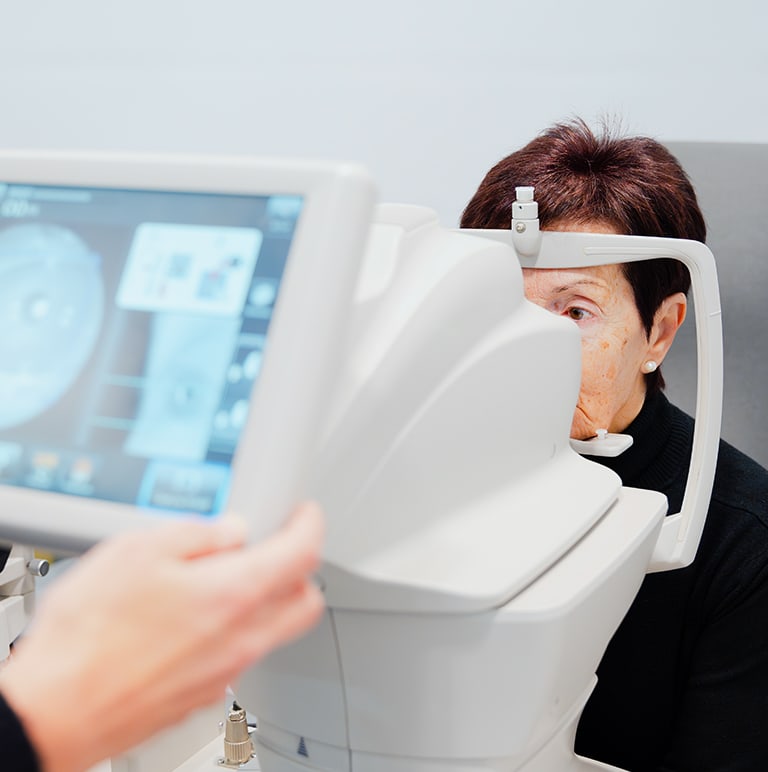
Modern eye care is about more than just providing you with the clearest vision we can. It’s about protecting the long-term health of your eyes. Retinal imaging and OCT-A (optical coherence tomography angiography) are innovative diagnostic tools that play a vital role in our preventative care approach.
These quick, noninvasive scans give our team the ability to detect vision problems early—often before symptoms begin. These tools empower us to safeguard your vision and give you peace of mind, knowing that even the smallest changes won’t go unnoticed. Here’s how they work.
Retinal Imaging: A Comprehensive Look Inside Your Eye
Think of retinal imaging as turning on the lights in the dark room that is the inside of your eye, rather than shining a small flashlight around the place.
Retinal imaging allows us to capture a more complete picture of your retina and optic nerve, providing a global view of their structure and health. By capturing high-resolution images of the back of your eye, we can monitor for subtle changes, assess your overall eye health, and tailor treatments to protect your vision as needed.
OCT-A: Advanced Detection for Early Action
OCT-A represents the latest innovation in diagnosing retinal conditions. This technology utilizes light waves to detect early signs of severe eye diseases, including age-related macular degeneration (AMD) and diabetic retinopathy.
By visualizing blood flow and the intricate layers of the retina, OCT-A helps detect problems at their earliest stages. This means we can intervene sooner, supporting positive outcomes for your eye health.
Eye Conditions We Can Detect & Manage
Routine eye exams are a key step in safeguarding your eye health. It’s easy to take your vision for granted when it’s serving you. Thankfully, eye exams can detect problems early, when they may be more easily treatable.
We recommend annual eye exams for individuals over 65, those who wear contact lenses, or those with vision concerns. If you’re younger and have healthy eyes, exams every 2 years can help catch changes early, though we may recommend a personalized schedule that is more frequent.
With tools like OCT-A and retinal imaging, we can create a complete picture of your eye health to detect issues before they progress. We will compare your imaging between appointments to better understand how things are changing.
If we detect an eye disease or condition, we’ll be here for you to answer all your questions and explain next steps.
Glaucoma is not a single disease, but rather a group of eye diseases that can result from damage to the optic nerve, which connects the eye to the brain. When glaucoma progresses, it can cause loss of peripheral vision (at the edges of your vision), but it can also irreversibly damage your vision without causing noticeable symptoms.
Diabetic Eye Care
Living with diabetes means paying special attention to your eye health. High blood sugar can damage the delicate blood vessels in your eyes, leading to conditions like diabetic retinopathy and diabetic macular edema.
Diabetic retinopathy occurs when blood vessels in the retina become damaged, potentially leading to vision loss if untreated. Diabetic macular edema, a related condition, causes swelling in the central area of the retina, affecting your ability to see faces, drive, and read.
Through annual diabetic eye exams, we can monitor these changes and take proactive steps to protect your vision.
Age-Related Macular Degeneration (AMD)
Age-related macular degeneration is a common eye condition that affects the macula, the part of your retina responsible for sharp, central vision. AMD comes in two forms—dry and wet. It’s a leading cause of vision loss in Americans 60 and older.
Using OCT-A and retinal imaging, we can detect early signs of dry AMD, often before symptoms appear. For intermediate dry AMD, lifestyle changes and special supplements can slow progression. If AMD progresses to the wet form, we work closely with trusted specialists to ensure you receive the care you need.
Glaucoma
We may sound like a broken record, but this silent damage is why it’s so important to keep up regular eye exams, especially after you’re over 50, and even if your vision seems stable.
We have several ways to detect signs of glaucoma, including visual field testing, retinal imaging, and OCT-A.
Glaucoma can be managed with medicated eye drops or oral medication, but a surgical procedure to reduce eye pressure is sometimes necessary. We work closely with each of our patients to create a personalized solution that makes sense for their lives and vision.
Dry Eye Disease
Do you notice gritty, irritated eyes when you wake up, even if you had a good night’s sleep? Or maybe you find your eyes tired, scratchy, or red midway through the day? These symptoms can be related to dry eye disease, a common condition that particularly affects us as we age and can range from slightly annoying to debilitating.
Dry eye disease happens when there’s something “off” in your tears. Often, tear issues are due to a lack of oil supplied by specialized glands along your eyelids. These glands can become blocked or dysfunctional, resulting in poor-quality tears and sore eyes. Over time, this irritation can worsen, even affecting your vision and corneal health.
Come in for an eye exam, and we can dig into what’s causing your dry eye symptoms, then create a plan to bring you relief.
Taking Care of Your Eyes Today & Beyond
Our team is truly dedicated to helping you see well and giving you comprehensive eye care that goes beneath the surface. We know what’s there today and what may be coming.
Book your eye exam today and let us show you what compassionate eye care is all about.
Book AppointmentVisit Our Location

Our Address
- 707 N. Pearl St., Suite D
- Ellensburg, Washington 98926
Contact Us
- Phone: 509-925-9873
- Email: fec@fairpoint.net
Clinic Hours
- Monday: 8:00 AM – 5:00 PM
- Tuesday: 8:00 AM – 5:00 PM
- Wednesday: 8:00 AM – 5:00 PM
- Thursday: 8:00 AM – 5:00 PM
- Friday: 8:00 AM – 1:00 PM
- Saturday: Closed
- Sunday: Closed
*Closed for lunch between 12:00-1:00, daily



Our Brands








Our Google Reviews





- Eyewear & Contacts
- Glasses
- Sunglasses
- Order Lenses
-
Family Eye Clinic
- 707 N. Pearl St., Suite D
- Ellensburg, Washington 98926
-
P: 509-925-9873
fec@fairpoint.net